How I build a vendor bench that holds up under pressure
 Jay Mark Calaor
6 min read
Jay Mark Calaor
6 min read
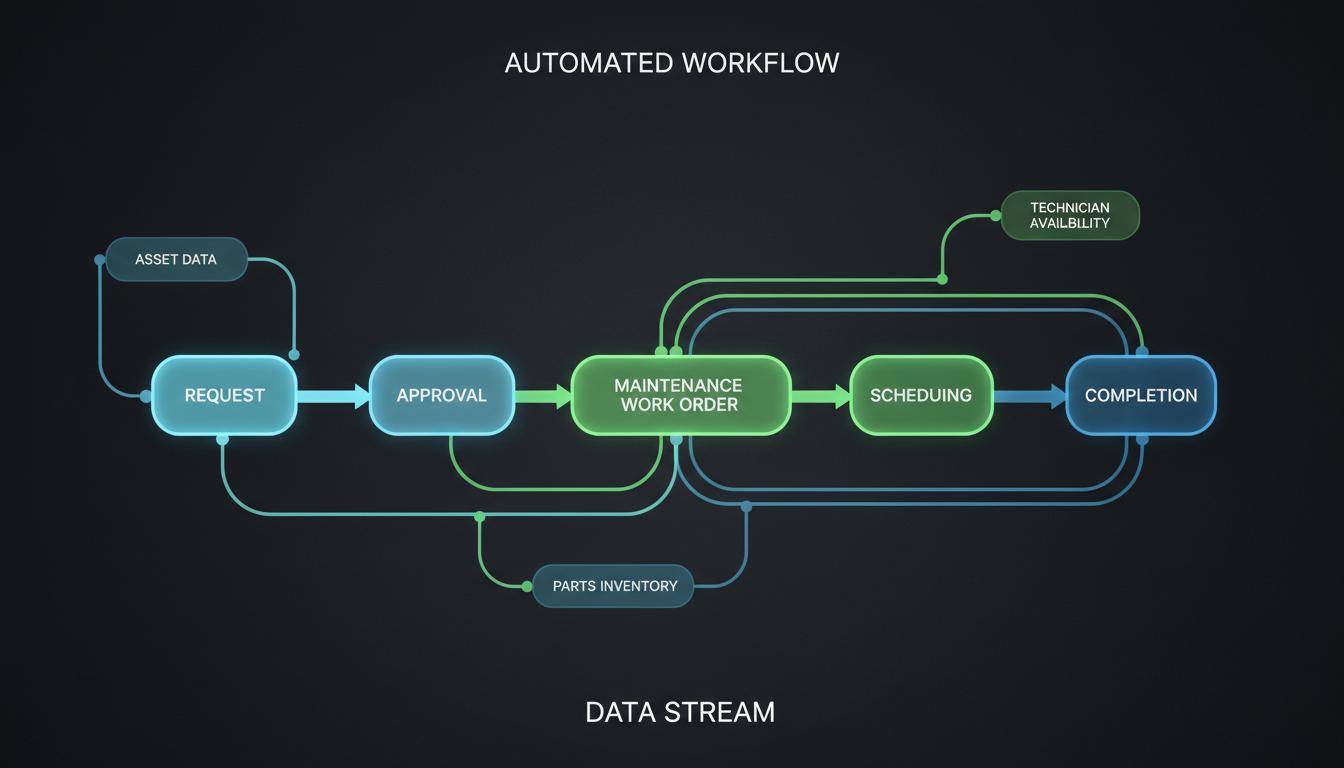
Every maintenance system eventually runs into the same wall. The work order is written, approved, and ready, and there is nobody available to do it. A vendor bench is what stands between a clean work order and a resident waiting five days for a plumber, and building that bench is its own workflow. It looks nothing like maintenance coordination.
Why the bench has gotten harder to build
The labor market is the backdrop for all of this. In the Associated General Contractors 2026 workforce survey, 92% of construction firms reported difficulty hiring qualified hourly craft workers, and Associated Builders and Contractors estimates the industry needs to attract roughly 349,000 net new workers in 2026 just to keep pace with demand. Those figures describe construction rather than property maintenance specifically, but the trades overlap heavily and the pressure reaches us the same way. The good vendors are busy, and being an easy client is now part of how you get scheduled.
That reframes the whole exercise. A vendor bench is not a list of phone numbers you collect once and forget. It is a small group of trades who know your properties, know they will be paid on time, and pick up when you call because working with you is straightforward.
Onboarding is a gate, not a formality
No vendor gets a work order from me until four things are on file. This is the part most teams handle informally and regret later.
- A signed W-9. Collected before the first job, not in January when 1099s are due. Worth noting for anyone revising their process this year: the 1099-NEC reporting threshold rose from $600 to $2,000 for payments made on or after January 1, 2026 under the One Big Beautiful Bill Act, with inflation adjustments beginning in 2027. That means fewer forms to issue, but I still collect the W-9 from everyone, because you rarely know in advance which vendor will cross the line.
- License verification. Checked against the state or local licensing board directly, never taken from a business card. Requirements vary by state and by trade, so this is a per-jurisdiction check rather than one blanket rule.
- A current certificate of insurance showing general liability and, where the vendor has employees, workers compensation.
- Agreed rates and scope in writing. Hourly or flat rate, trip charge, after-hours rate, and a not-to-exceed amount above which they stop and call me before continuing.
The paperwork is boring right up until the day there is a claim, and then it is the only thing that matters.
The certificate is not the coverage
Here is the detail I see missed most often. A certificate of insurance is an informational summary of what a policy contains. What actually extends that vendor's coverage to the owner or the manager as an additional insured is the policy endorsement sitting behind it. For general liability, the two ISO forms that come up are CG 20 10, which covers ongoing operations while the work is being performed, and CG 20 37, which covers completed operations after the vendor has finished and gone.
The gap between them matters because plenty of claims surface months after the job closed. A vendor who is an additional insured for ongoing operations only gives you nothing when a water heater they installed in spring fails in the fall. So when an owner requires additional insured status, I ask for the endorsement pages rather than the certificate alone, and I read them.

Tracking expirations before they become emergencies
Insurance lapses quietly. Nobody calls to tell you, and the first sign is usually a vendor arriving on site with a certificate that expired six weeks ago. So renewals get chased on a schedule instead of discovered by accident. I open the renewal request around 60 days before expiration and follow up near 30 days, at 7 days, and on the expiration date itself if it is still outstanding.
The rule that makes any of that tracking meaningful is simple. No current certificate on the date of service, no dispatch. It feels harsh the first time you enforce it on a vendor you like, and it is the only version that works, because a tracking log that never blocks anything is just a list of dates.
Industry comparisons of manual and automated compliance tracking generally put spreadsheet-based tracking in the 60% to 70% compliance range and automated platforms above 90%. I read that less as an argument for buying software and more as a warning about what happens when the reminder depends on somebody remembering to open the file. Whether it comes from a compliance platform or a calendar automation, the reminder has to arrive without anyone deciding to go looking for it.
Deciding who gets the call
Once the bench exists, dispatch stops being about who answers the phone first. I keep a short record on each vendor and update it as jobs close:
- Response time. How long from dispatch to a scheduled appointment, which is the number residents actually feel.
- First-visit completion. How often the job finishes without a second trip. A vendor who fixes it once is worth more than a cheaper one who has to come back.
- Quote accuracy. Whether the invoice matches the estimate, and whether change orders were raised before the extra work or after it.
- Resident feedback. Whether they arrived inside the window, called ahead, and left the unit clean.
I aim for at least two vetted vendors per trade per market, and three for plumbing and HVAC since those generate most of the emergencies. The second name is less a backup than insurance against one vendor's calendar becoming your calendar. When the first one gets busy, the work keeps moving instead of queuing behind them.
Paying on time is a retention strategy
In a market where most firms cannot hire enough people, vendors get to choose their clients. The ones who pay within a week, describe the problem clearly, arrange unit access without a runaround, and do not argue over every invoice are the ones who get scheduled first. I treat vendor payment terms the same way I treat resident communication: predictable, consistent, and never something the other party has to chase.
Where AI actually helps
The admin around vendors is heavy and repetitive, which is exactly where I put AI to work. It drafts the onboarding requests and the renewal follow-ups so the tone stays consistent across dozens of vendors. It reads a certificate of insurance and pulls the carrier, policy numbers, coverage limits, and expiration dates into a structured row I can check at a glance. It summarizes a month of work order history per vendor into the four numbers above, so the scorecard gets built from what actually happened rather than from my impressions of it.
What I keep is the judgment. Whether an endorsement satisfies an owner's requirement, whether a vendor stays on the bench after a bad job, whether a quote is reasonable for the work: those are calls I make. AI is very good at reading a document and quite bad at knowing what is at stake inside it. More on the maintenance flow this feeds →
Key takeaways
- Gate the first work order behind a W-9, license verification, a current COI, and written rates with a not-to-exceed limit.
- The certificate summarizes coverage and the endorsement grants it. Ask for CG 20 10 and CG 20 37 when additional insured status is required.
- Chase insurance renewals starting around 60 days out, and enforce a no-current-certificate, no-dispatch rule.
- Score vendors on response time, first-visit completion, quote accuracy, and resident feedback, then dispatch on the score.
- Keep two vetted vendors per trade, three for plumbing and HVAC, and pay all of them quickly.
Jay Mark Calaor
Property management operations coordinator and AI-fluent VA. I build the vendor, maintenance, and leasing systems that keep 800+ units running without the fire drills. Get in touch →